

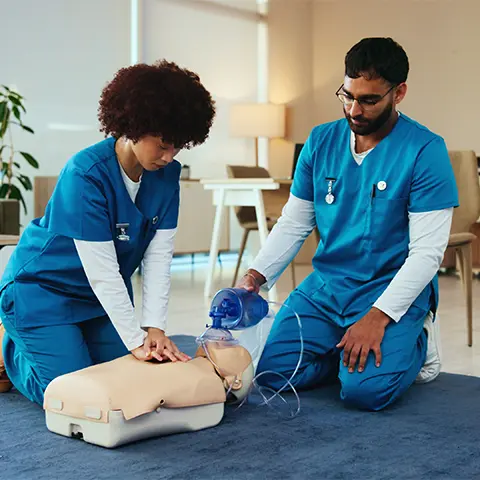
Preparing for the New Zealand OSCE can feel overwhelming in the beginning. Most nurses start with the same questions:
“What exactly are they expecting?”
“How strict are the examiners?”
“Why do some candidates fail even after studying so much?”
The truth is, the OSCE is not just about clinical knowledge. Many candidates already have years of nursing experience before attempting the exam. What the OSCE really tests is whether you can apply your knowledge safely, professionally, and confidently in a New Zealand healthcare setting.
A lot of nurses spend months memorising procedures but still struggle during the exam because they are not prepared for the pressure, communication style, and critical thinking expected in the stations.
The good news is that the exam becomes much more manageable when you understand how to prepare correctly. Success in the NZ OSCE usually comes from consistent practice, understanding the purpose behind each action, and learning how to stay organised under pressure.
Understand What the NZ OSCE Is Assessing
One of the biggest mistakes candidates make is preparing for the OSCE like a theory exam. The OSCE is not designed to test how much information you can memorise. It is designed to assess whether you can function safely as a nurse in real clinical situations.
Examiners observe how you communicate with patients, how you maintain safety, how you prioritise care, and how you respond when situations change unexpectedly.
They are looking for nurses who can:
provide safe patient care
communicate professionally
identify risks early
maintain infection control
and respond appropriately under pressure
This means even small details matter. Missing patient identification, forgetting hand hygiene, poor documentation, or failing to escalate concerns can affect your performance significantly.
When you understand this early, your preparation becomes more focused and practical.
Focus on Structure Instead of Memorising Scripts
Many candidates try to memorise complete answers or fixed dialogues for every station. This often creates more problems during the actual exam.
OSCE scenarios rarely go exactly the same way every time. Patients may interrupt you, ask unexpected questions, refuse care, become emotional, or require reassurance. If you depend completely on memorised scripts, it becomes difficult to adapt naturally when something changes.
Instead of memorising word-for-word responses, focus on understanding the structure of each station.
For example, most stations usually involve:
introducing yourself properly
confirming patient identity
explaining the procedure
gaining consent
maintaining safety
performing the task correctly
reassessing the patient
and documenting or handing over appropriately
escalation if needed
Once this structure becomes familiar, you will feel much more confident handling different scenarios naturally.
Communication Matters More Than Many Candidates Expect
Good communication is one of the most important parts of the New Zealand OSCE. However, communication does not mean speaking perfect English or using advanced medical vocabulary.
Examiners are looking for clarity, professionalism, empathy, and patient-centred care.
You should be able to explain procedures in simple language, reassure anxious patients, listen carefully, and involve the patient in decisions about their care.
For example, instead of sounding overly technical or robotic, communication should feel respectful and natural. Patients should feel informed and comfortable throughout the interaction.
New Zealand healthcare places strong importance on dignity, cultural respect, and patient involvement. Candidates who communicate in a rushed, dismissive, or mechanical way often lose marks even when the clinical procedure itself is correct.
Simple communication done properly is always more effective than complicated communication done poorly.
Infection Control Is a Major Area of Assessment
Many candidates underestimate how closely infection control is observed during the exam.
In the NZ OSCE, infection prevention is not treated as a small checklist item. It is considered part of overall patient safety. Even clinically strong candidates can lose marks through contamination errors or unsafe handling practices.
Examiners pay attention to:
hand hygiene timing
PPE usage
sterile field maintenance
sharps disposal
equipment handling
and prevention of cross-contamination
Candidates often become so focused on completing the procedure that they forget basic infection control principles midway through the station.
Developing strong habits through repeated practice is important because infection control should become automatic during the exam.
Learn Time Management Early During Preparation
Time pressure is one of the biggest challenges in OSCE exams. Many candidates know the station well but struggle to complete everything within the allocated time.
This usually happens because they:
spend too much time at the beginning
over-explain unnecessary details
become distracted after making a mistake
or lose structure midway through the station
Good time management comes from practising stations under realistic exam conditions.
When practising, train yourself to move through the station in an organised flow:
Initial assessment and introduction
Patient safety checks
Main procedure or intervention
Reassessment and patient education
Documentation or handover
Repeated timed practice helps build confidence and reduces panic during the real exam.
Clinical Reasoning Is Extremely Important
The strongest OSCE candidates are usually not the ones who memorise the most. They are the ones who understand why they are doing each step.
Clinical reasoning helps you adapt when situations change unexpectedly.
For example, if a patient suddenly becomes dizzy, distressed, or unstable during a station, the examiner wants to see whether you recognise the problem and respond appropriately.
Candidates who understand prioritisation and escalation perform much better than those who only memorise procedures mechanically.
Always ask yourself during practice:
Why am I doing this step?
What risk am I preventing?
What would I do if the patient’s condition changes?
This develops safer decision-making and improves confidence significantly.
Practise With Realistic Scenarios, Not Just Notes
Reading guidelines and watching videos can help during early preparation, but OSCE performance improves most through active practice.
The actual exam environment feels very different because you are being observed continuously while managing time pressure and communication at the same time.
That is why realistic mock practice is extremely valuable.
Effective practice should include:
roleplay scenarios
timed stations
verbal communication
documentation
feedback sessions
and unexpected patient responses
The more exposure you have to realistic scenarios, the more comfortable you become handling pressure calmly.
Documentation and Handover Should Not Be Ignored
Some candidates focus heavily on procedures and forget that documentation and communication are also part of safe nursing practice.
Incomplete handovers or unclear documentation can affect overall scoring.
You should practise:
ISBAR communication
nursing documentation
escalation reporting
and concise clinical handovers
The goal is to communicate important information clearly without unnecessary details.
Good documentation reflects organised thinking and professional practice.
Build Confidence Through Repetition
Confidence in the OSCE usually comes from familiarity and repetition, not from last-minute studying.
Candidates who practise consistently begin to develop automatic habits for:
introductions
patient safety checks
communication
infection control
and station structure
This reduces mental overload during the exam.
Most candidates who succeed are not necessarily perfect performers. They are usually the ones who remain calm, structured, and safe even when small mistakes happen.
Passing the New Zealand OSCE requires more than memorising procedures. Success comes from understanding patient safety, improving communication, practising clinical reasoning, and becoming comfortable performing under pressure.
Consistent preparation, realistic mock practice, and constructive feedback can make a major difference in overall performance and confidence.
Tutel New Zealand OSCE training focuses on practical preparation through realistic scenarios, guided feedback, communication improvement, and exam-focused practice sessions designed to help nurses approach the OSCE with greater confidence and clarity.